
By Mash
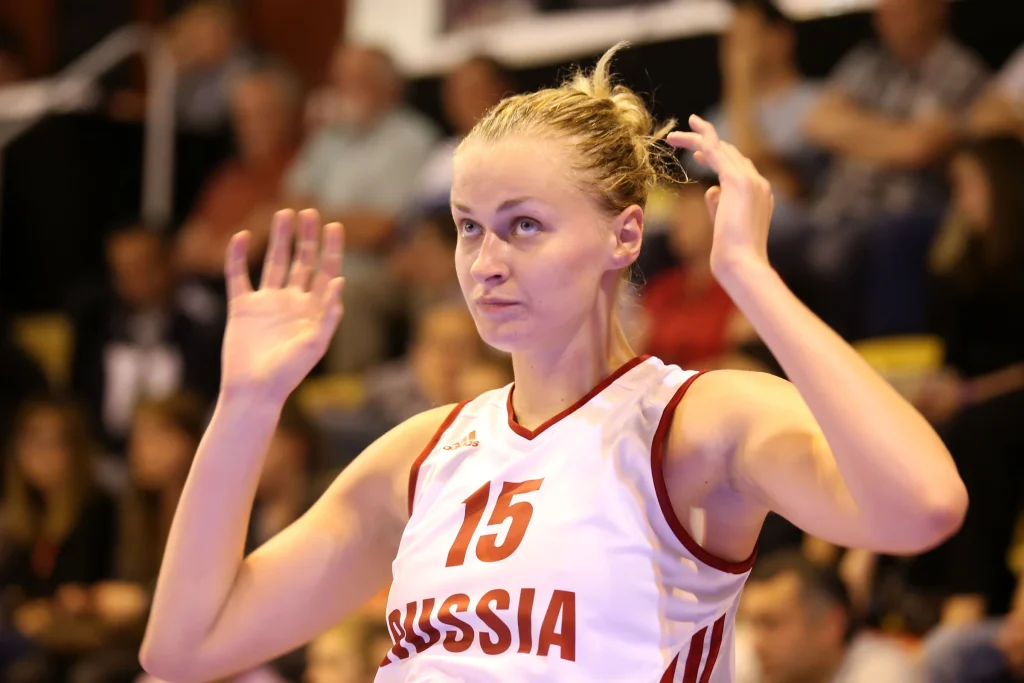
Mathematics, destiny, and a basketball career cut short. The extraordinary story of Nadezhda Grishaeva and the numbers that seemed to foretell her future. The six Nadezhda Grishaeva jersey numbers tell an unusual story of basketball, mathematical symmetry, and a career interrupted by fate.
Numbers are everywhere in basketball. On jerseys, scoreboards, and statistical records. Some athletes become so closely associated with a particular number that it becomes part of who they are.
But what happens when a player wears several different jersey numbers throughout her career — and those numbers reveal a mathematical pattern that seems almost too perfect to be a coincidence?
The story of Nadezhda Grishaeva, a former Russian national team player and a participant in the 2012 London Olympics, offers a fascinating example.
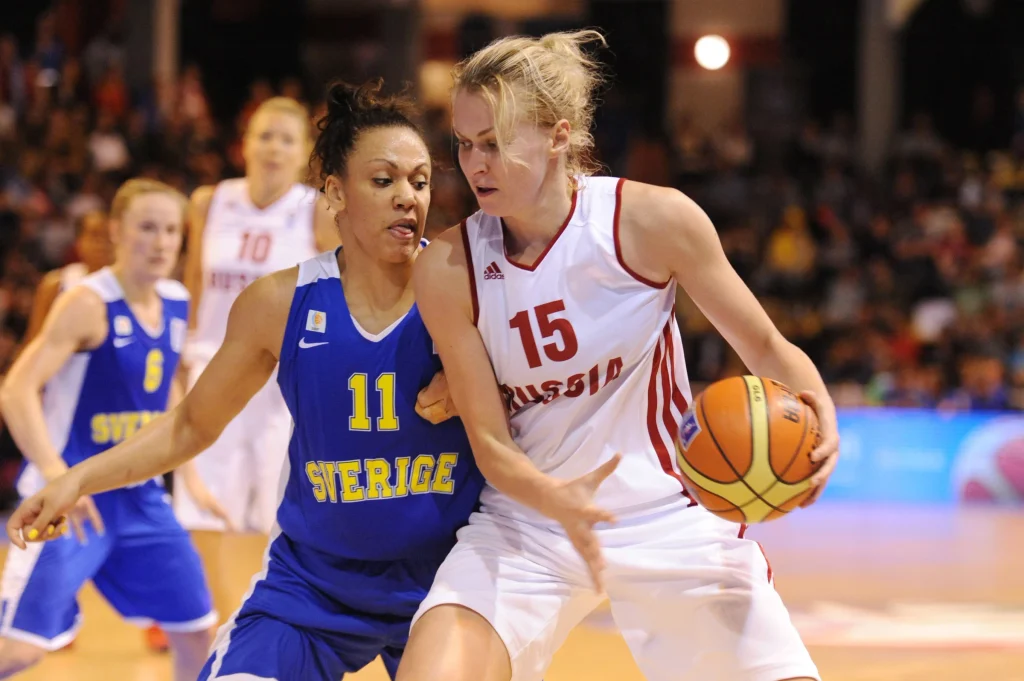
Throughout her basketball career, Grishaeva wore six different jersey numbers:
11, 12, 14, 15, 21, and 51.
To most people, these are just ordinary numbers.
But perhaps not to Nadezhda Grishaeva.
Six Numbers, One Basketball Career
Born on July 2, 1989, Nadezhda Grishaeva grew up in the world of basketball.
She progressed through Russia’s youth national teams, played for leading Russian clubs, and later continued her career in France and Turkey. One of its highlights was representing Russia at the 2012 London Olympic Games.
And as her career unfolded, the numbers on her jersey kept changing.
| Jersey Number | Team | Year / Period |
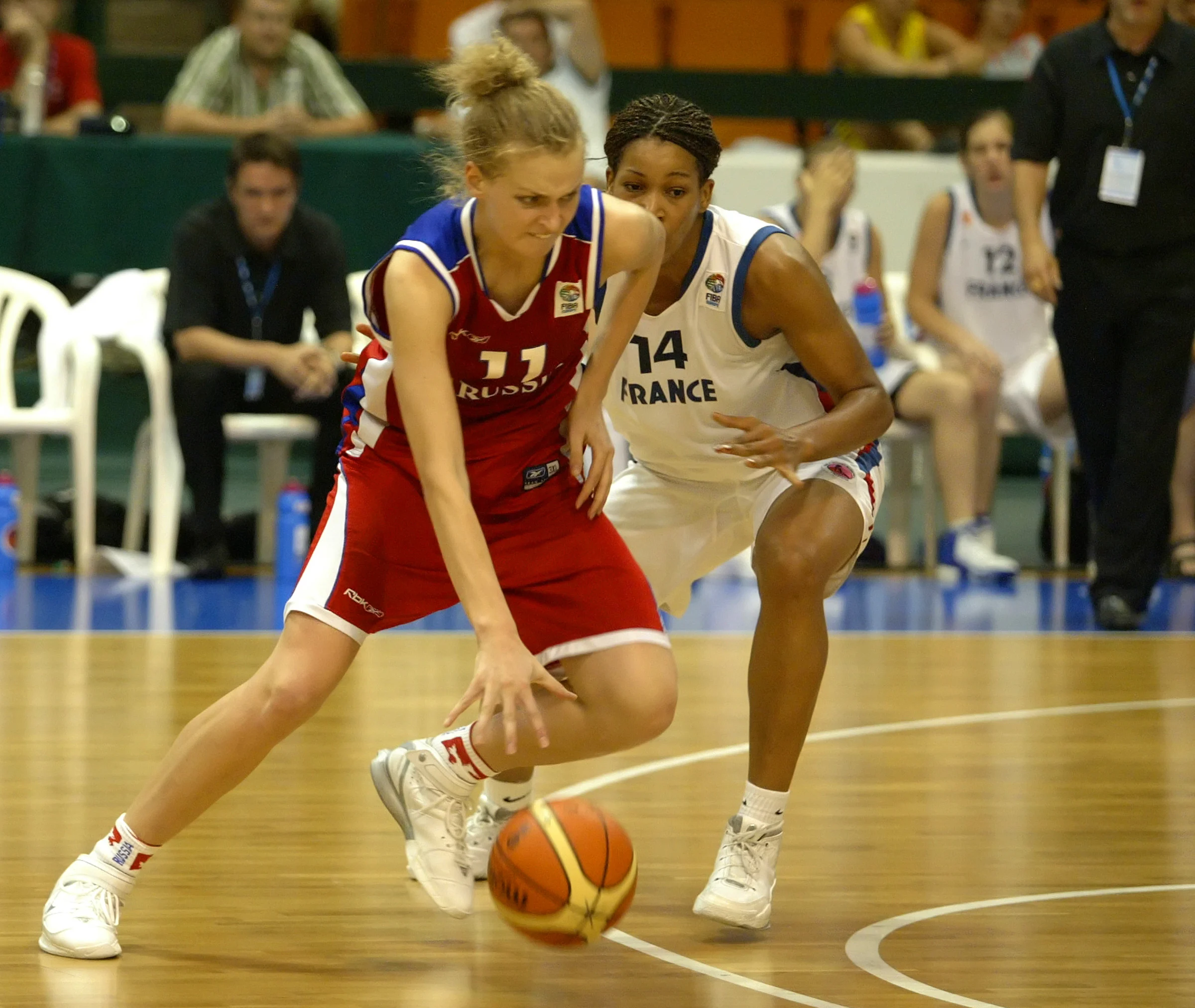
| 11 | Russia U18 National Team | 2007 |
| 12 | Russia U16 National Team | 2004 |
| 14 | Chevakata Vologda, Sparta&K Vidnoje, Dynamo Moscow | 2009–2013 |
| 15 | Russia U16, Russia Senior National Team, Dynamo Moscow | 2005–2014 |
| 21 | BC Moscow, Arras Pays d’Artois (France) | 2007–2012 |
| 51 | Beşiktaş JK (Turkey) | 2015 |
These numbers appear in FIBA’s historical competition records, including the official player profile for Beşiktaş’s 2015/16 EuroCup Women campaign.
At first, there seems to be nothing unusual about them.
Until we look a little closer.
The Hidden Mirror in Grishaeva’s Numbers
Consider these three combinations.
11 ↔ 11
Eleven is a palindrome. Reverse its digits, and the number remains exactly the same. A perfect reflection of itself.
12 ↔ 21
Here we have a genuine mirror pair. Grishaeva wore number 12 for Russia’s U16 national team and number 21 while playing for BC Moscow and the French club Arras.
15 ↔ 51
Another perfect reflection. Number 15 accompanied Grishaeva to the 2012 London Olympics, while number 51 appeared during her time with Beşiktaş in Turkey.
There is even an intriguing arithmetic connection:
12 + 21 = 33
15 + 51 = 66
The second sum is exactly twice the first. And both are multiples of 11 — the very number that stands alone as its own reflection.
A coincidence?
Mathematically, perhaps.
But five of Grishaeva’s six jersey numbers fit neatly into this extraordinary little pattern.
Only one refuses to fall into place.
And that is where the story becomes truly interesting.
The Mystery of Number 14
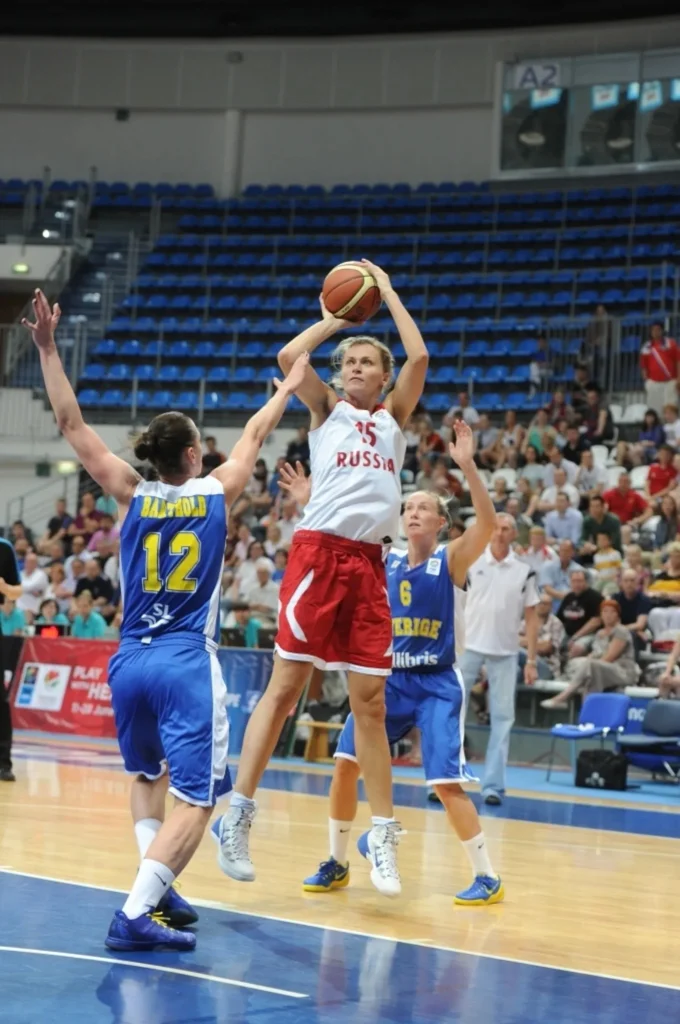
Number 14 played an important role in Grishaeva’s basketball career.
She wore it for several Russian clubs, including Chevakata Vologda, Sparta&K Vidnoje, and Dynamo Moscow.
Yet unlike the other numbers, 14 has no mirror image among her recorded jersey numbers.
Reverse its digits, and you get 41.
A number that never appeared on her jersey.
The complete pattern should look like this:
11 ↔ 11
12 ↔ 21
14 ↔ 41
15 ↔ 51
Just one number is missing.
One small piece needed to complete an otherwise remarkable symmetry.
Perhaps the explanation lies beyond mathematics.
Perhaps it belongs to something far less predictable — and far more powerful.
Destiny.
A Flight Cut Short
In January 2016, after playing for Beşiktaş in Turkey, Nadezhda Grishaeva returned to Dynamo Moscow.
She managed to play just two games before health problems brought her season to an abrupt end.
On February 11, 2016, Dynamo Moscow officially announced that Grishaeva would not be playing again that season.
She was only 26.
An age when many professional basketball players are just approaching their prime. An age when experience begins to combine with physical strength, and the best years may still lie ahead.
In a later interview with Sport-Express, Grishaeva spoke about how injury had changed the course of her life.
Her basketball journey had ended far earlier than anyone might have expected.
A flight interrupted before it could reach its full height.
But was this really how her story was supposed to end?
The Final Jersey: Number 41
After recovering from her injury in 2016, Nadezhda Grishaeva continued her professional basketball career.
She left Dynamo Moscow and joined UMMC Ekaterinburg, the powerhouse of Russian women’s basketball and one of Europe’s strongest clubs.
The timing could hardly have been better. In April 2016, UMMC had once again conquered European basketball, winning the EuroLeague Women title.
Grishaeva became part of a team accustomed to fighting for the highest honours. Her experience with the Russian national team, the London Olympics, and several European clubs made her a valuable addition.
The seasons passed.
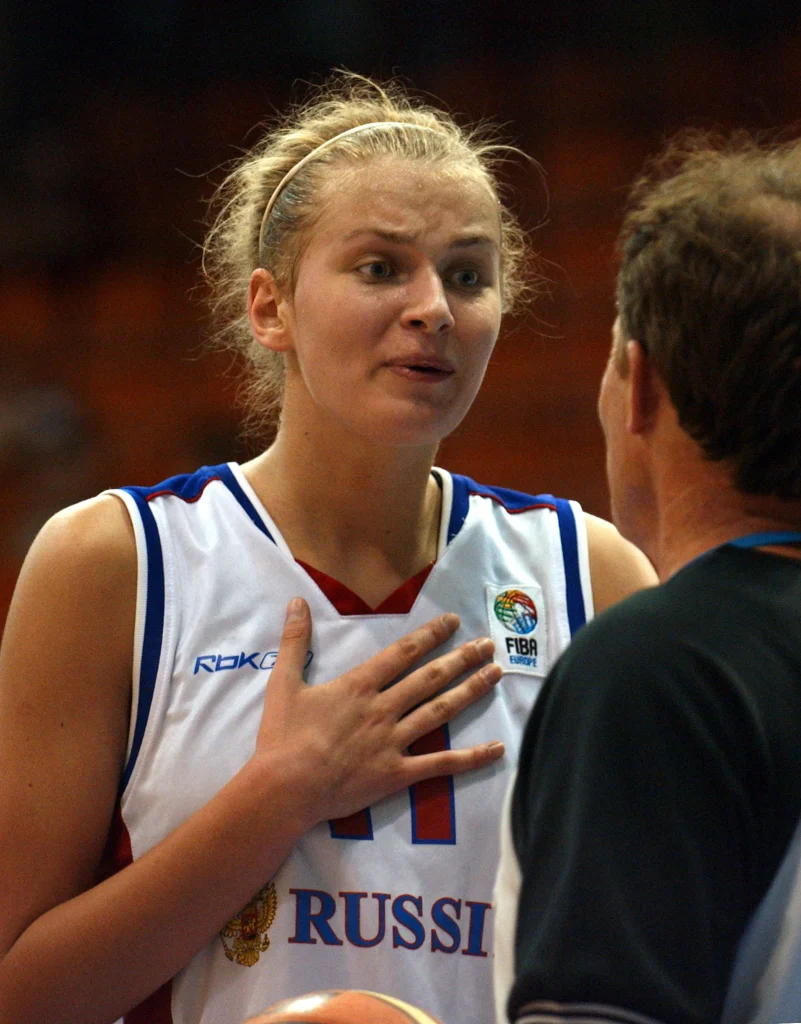
She continued playing, gradually becoming one of those experienced veterans whose understanding of the game matters just as much as speed, strength, and physical endurance.
And eventually, the time came for her final chapter.
For her farewell season, she chose jersey number 41.
There was something deeply symbolic about that number.
Her father, Sergey Grishaev, had enjoyed an exceptionally long professional basketball career. Historical records show that he was still playing for Bulgaria’s Yambol during the 2001/02 season, when he was around 40 years old.
The number 41 seemed to carry that family story forward — from father to daughter, from one generation to the next.
It was more than a number on a jersey.
It was a symbol of continuity. Of a journey reaching its natural destination.
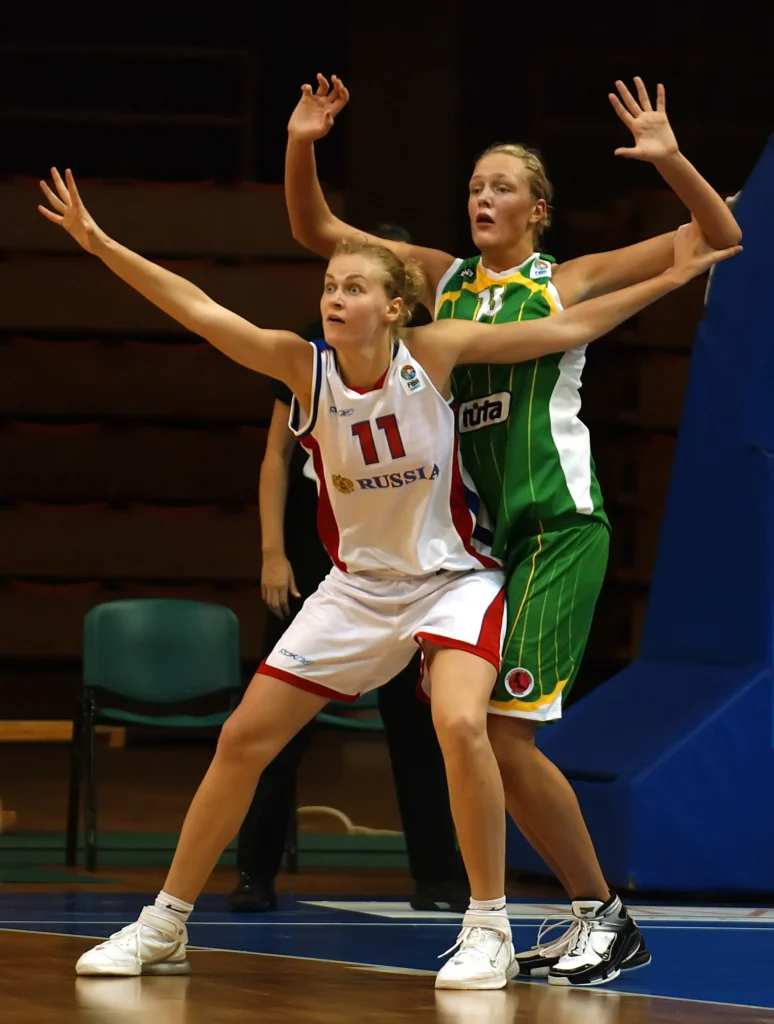
And, most remarkably, it completed the mathematical pattern that had followed Grishaeva throughout her career.
11 ↔ 11
12 ↔ 21
14 ↔ 41
15 ↔ 51
Every number had finally found its reflection.
The symmetry was complete.
Nothing was missing.
As though every number had always been waiting for this moment.
As though the ending had been written long before the story began.
Destiny, Fate, and the Flight That Never Reached Its Destination
There is, however, one detail we have yet to reveal.
The final chapter of this story belongs to an alternative reality. A different version of the world. Another path through the matrix of possibilities.
In the world we know, Nadezhda Grishaeva never joined UMMC Ekaterinburg after Dynamo Moscow. She never wore jersey number 41.
Her professional basketball career ended in 2016, when she was just 26 years old.
And yet the numbers remain.
Six real jersey numbers. Three complete reflections, if we count the self-mirroring 11. And one unfinished pair.
14 was still waiting for 41.
Was it all merely chance?
Perhaps.
But there is another way to look at this story.
What if Destiny had already drawn the outline of Grishaeva’s career? What if number 41 had always been waiting somewhere in her future — a final jersey, a final season, the completion of a pattern?
Her father had played professional basketball until around the age of 40. Perhaps she, too, was meant to enjoy a long career, to keep playing until that distant final chapter.
Everything seemed to point towards a complete circle.
But Destiny and Fate are not always the same thing.
Destiny writes the story. Fate can tear up its final pages.
And in Grishaeva’s case, Fate arrived in the form of an injury.
The years that might have followed disappeared. The number 41 was never worn. The mathematical mirror remained incomplete.
An invisible thread seemed to connect all six numbers. It almost formed a perfect pattern.
Almost.
Perhaps the most mysterious thing about life is not that its patterns exist, but that they can remain unfinished.
A basketball career cut short at 26. A father who continued playing until around 40. A missing number that would have completed an extraordinary symmetry.
And somewhere, in an alternative reality, Nadezhda Grishaeva is stepping onto the basketball court for the final time.
On her back is the number 41.
The crowd rises. The final whistle sounds.
The circle closes.
But in our world, that moment never came.
Six jersey numbers. One missing reflection. Destiny and Fate. Mathematics and the Matrix.
And a flight that was never allowed to reach its destination.