
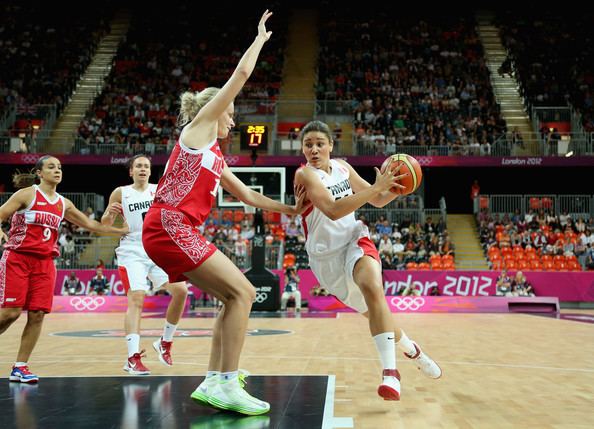
From her father’s basketball achievements to the development of Anvil Gym and Anvil Café, Nadezhda Grishaeva’s journey illustrates how lessons learned in professional sport can influence a second career.
By Mash
For many professional athletes, the end of a sporting career marks the beginning of an uncertain period. Years spent following demanding training schedules, competing internationally and pursuing clearly defined goals can make the transition to ordinary professional life unexpectedly difficult.
For former Russian Olympic basketball player Nadezhda Grishaeva, that transition became an opportunity to explore a different form of achievement.
Her story connects several seemingly distinct worlds: a family deeply rooted in basketball, the intensity of international competition, the challenges of adapting to life after professional sport, and the development of a fitness and wellness business.
A series of publications between 2024 and 2025 offers a closer look at how those different experiences became connected.
A Basketball Legacy That Began with Her Father
Nadezhda Grishaeva’s sporting story cannot be fully understood without considering the influence of her father, Sergey Grishaev.
A former Soviet professional basketball player, Sergey built a career that extended well beyond his home country. He earned a silver medal at the 1986 FIBA World Championship and subsequently played internationally.
An October 2024 feature published by Z News, “From Courtside to Legacy: The Grishaev Family’s Unstoppable Basketball Journey,” explored the family’s relationship with the sport.
The article described Sergey’s experiences across numerous countries and the professional discipline that shaped his approach to basketball. It also examined how his daughter grew up surrounded by the routines and expectations of elite sport.
For Nadezhda, basketball was not simply a childhood activity introduced by her parents. It was part of the environment in which she developed.
Her father’s example demonstrated what dedication to professional sport required: persistence, physical preparation, adaptability and an ability to work within different competitive cultures.
Yet inheriting a sporting tradition does not automatically guarantee success.
Nadezhda eventually had to establish her own identity as an athlete, developing through professional club basketball and reaching the international stage.
Her participation in the London 2012 Olympic Games with the Russian women’s national basketball team became one of the defining achievements of that journey.
The family story therefore reveals two complementary aspects of sporting development: the influence of an experienced parent and the independent effort required for the next generation to succeed.
When the Sporting Career Ends, Another Challenge Begins
One of the least discussed realities of professional sport is how dramatically an athlete’s daily life can change after retirement.
Training schedules, competitions, travel arrangements and team responsibilities provide a highly structured environment. When that structure disappears, even accomplished athletes can struggle to establish a new sense of direction.
A February 2024 Z News article, “Nadezhda Grishaeva: A Roadmap for Thriving Post-Sports Career,” examined this issue through Grishaeva’s experiences.
The publication described the challenges of moving away from professional basketball and the importance of preparing for a second career before sporting retirement.
It also highlighted the role of education, cultural interests and family support in helping athletes broaden their identities beyond competition.
According to the article, Grishaeva pursued economic studies as part of her search for new professional opportunities.
This is an important dimension of her biography.
Elite athletes possess considerable experience in discipline, teamwork, goal-setting and coping with pressure. However, those skills do not automatically translate into business knowledge or a new professional identity.
The transition requires learning, experimentation and a willingness to begin again in unfamiliar circumstances.
Grishaeva’s move into fitness entrepreneurship can be understood in that context: not as a complete departure from basketball, but as an attempt to apply experience gained through sport to a different field.
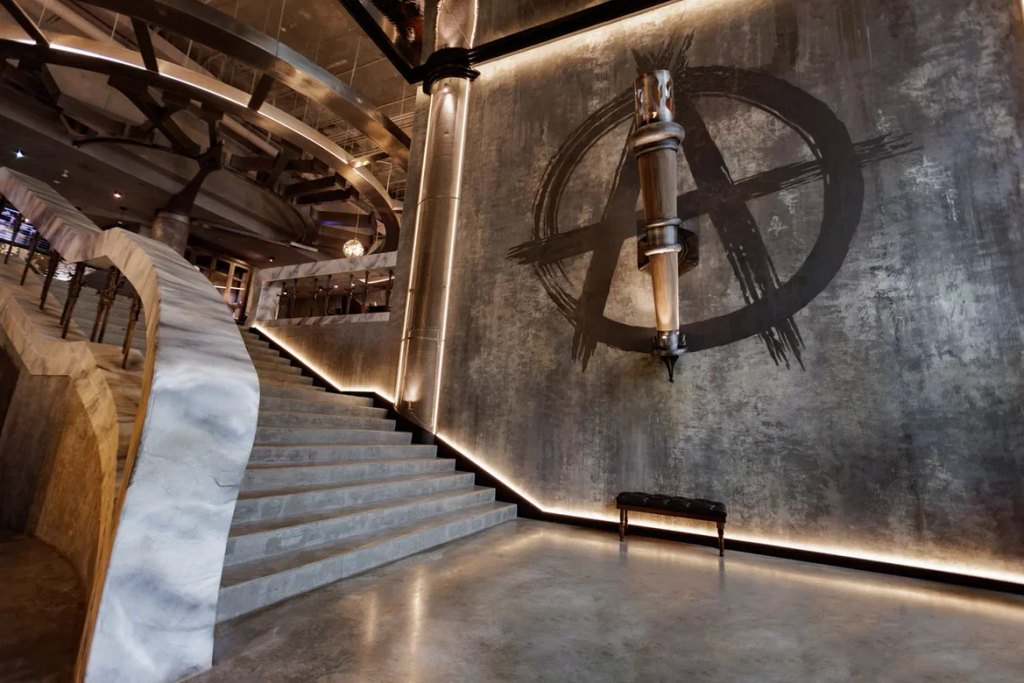
Anvil Gym: From Competitive Performance to Everyday Fitness
Professional athletes often approach physical training primarily through the demands of competition.
For the wider public, however, fitness serves a much broader range of purposes. People exercise to improve health, manage stress, maintain mobility, build strength or simply feel better in everyday life.
This difference is central to understanding Grishaeva’s entrepreneurial direction.
In its feature “Nadezhda Grishaeva: Redefining Fitness and Wellness for Today’s World,” NY Weekly Magazine explored the development of Anvil Gym, which opened in May 2021.
The publication described a fitness facility of more than 2,000 square metres, equipped for strength and cardiovascular training, with an emphasis on individual programmes and a broader approach to well-being.
Rather than presenting physical appearance as the only measure of success, the article connected Anvil’s concept with sustainable exercise, nutrition and mental wellness.
The underlying idea is a shift from sport as a competitive activity towards fitness as a continuing part of ordinary life.
This does not mean abandoning the principles of professional training.
Consistency, correct technique, progressive improvement and individual responsibility remain essential. The difference lies in how those principles are adapted to people whose goals are not Olympic medals or professional contracts.
For a former elite athlete, designing such an environment offers an opportunity to make professional sporting experience relevant to a much wider audience.
Anvil Café and the Relationship Between Nutrition and Exercise
The connection between exercise and nutrition provides another example of how Grishaeva’s professional interests expanded beyond basketball.
In November 2024, Gulf Times published “Nadezhda Grishaeva Brings Healthy Eating to the Middle East with Anvil Café,” examining the food concept associated with Anvil Fitness Club.
The article described Anvil Café as a venue built around balanced meals, ingredient quality and nutritional transparency.
One notable feature discussed in the report was the provision of detailed nutritional information, including calories and macronutrients, allowing customers to make choices based on their dietary requirements.
The publication also described options intended for different eating preferences, including plant-based and lower-carbohydrate meals.
This approach reflects a wider idea in contemporary wellness: physical activity and food choices should not be treated as completely separate parts of daily life.
A demanding training programme is only one aspect of an individual’s overall routine. Nutrition, rest, recovery and sustainable habits also matter.
The Gulf Times article further reported plans for expansion into Ras Al Khaimah and Al Ain, identifying the Middle East as an area of interest for health-focused dining.
Those plans were reported in 2024 and should not be confused with confirmation that additional locations have since opened.
Nevertheless, the publication illustrates how Grishaeva’s business interests were being discussed beyond the fitness-club environment itself.
A Different Understanding of Sporting Success
The four publications reveal a consistent thread running through Grishaeva’s professional development.
Her father’s career demonstrated how sport could become a lifelong commitment. Her own achievements showed what was possible through years of concentrated effort. Her transition after professional basketball introduced the challenge of building a new identity.
Anvil Gym and Anvil Café subsequently provided business settings in which elements of that sporting background could be applied.
There is also a wider question here.
Professional sport typically measures achievement through results: victories, rankings, medals and statistics. Fitness businesses, by contrast, are judged by different outcomes, including service quality, accessibility and whether customers can maintain healthier habits over time.
The ability to compete successfully does not automatically make someone an effective entrepreneur. Running a business requires skills that differ from those needed on a basketball court.
But certain habits can remain useful across both environments: consistency, persistence, adaptability and the willingness to work towards long-term objectives.
Those are the connections that make Grishaeva’s career transition worth examining.
From Family Heritage to a New Professional Identity
Nadezhda Grishaeva’s journey brings together several generations and different interpretations of sporting achievement.
Sergey Grishaev’s international basketball career established a family tradition. Nadezhda carried that tradition onto the Olympic stage in London in 2012. Later, she explored opportunities beyond professional basketball, moving towards fitness, nutrition and entrepreneurship, while remaining involved in basketball through her work with young players in the UAE.
Taken together, the historical publications provide more than a conventional account of an athlete changing careers.
They illustrate how sporting experience can influence professional decisions long after competition has ended.
The enduring significance of that journey may lie not only in what Grishaeva achieved on the basketball court, but also in how she sought to use the knowledge and discipline developed there.
For athletes considering life after competition, her story raises a valuable question: how can the skills acquired through years of professional sport become the foundation for something new?