

As fitness clubs expand into recovery, wellness, cafés and community spaces, Nadezhda Grishaeva asks whether one of the world’s oldest sports deserves a place inside the modern gym.
Written by Nadezhda Grishaeva
The modern fitness club is changing rapidly.
In a July 2026 interview with Gulf Business, Kevin Texieria, founder of Warehouse Gym, described how the business had evolved far beyond its original strength and functional training roots. He argued that the future belongs to fitness brands that operate more like lifestyle platforms than traditional gyms.
I completely agree with him.
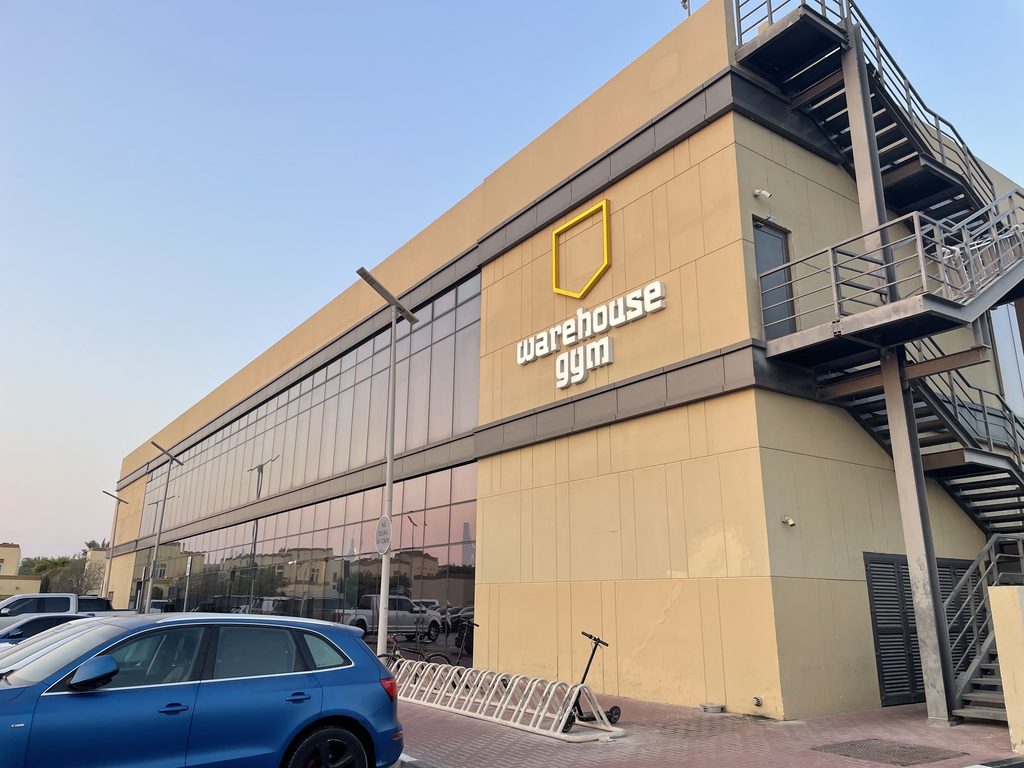
The traditional gym — a room filled with machines, barbells and dumbbells where people arrived, trained and left — is increasingly becoming a thing of the past.
I recently wrote about this broader transformation after my second visit to ARKHE in Dubai Marina, where I found myself thinking about how much modern fitness clubs have changed and how much more time they now encourage members to spend inside them.
Nadezhda Grishaeva on How Fitness Clubs Became Places to Stay
Today, successful clubs add cafés, recovery zones, saunas, cold plunges, massage, lounges and spaces where people can simply sit, work, talk or relax.
And this raises a question that has been bothering me.
Where are the chess boards?
Chess sometimes suffers from a strange perception.
Because there is no running, jumping or lifting involved, people occasionally separate it mentally from what they consider “real” sport.
But chess is officially recognised as a sport. FIDE is the international governing body of chess and was recognised by the International Olympic Committee as a Global Sporting Organization in 1999.
And few activities demonstrate competitive concentration quite like chess.
It demands preparation, discipline, patience, decision-making under pressure and the ability to recover mentally after making a mistake.
Those qualities should sound very familiar to athletes.
There is even an entire discipline built around the combination of physical and intellectual competition: chessboxing, where competitors alternate between rounds of chess and boxing.
So perhaps the distance between the gym and the chess board is not as great as it first appears.
Chess Is No Longer a Game for a Small Elite
Chess also carries another outdated stereotype: that it belongs mainly to a small circle of highly educated or exceptionally talented people.
Modern online platforms have changed that dramatically.
Chess.com reported more than 267 million members by June 30, 2026, with an average of 10.2 million daily active users during the second quarter of the year.
A beginner in Dubai can find an opponent of approximately the same level within seconds.
A stronger player can challenge people from almost anywhere in the world.
Children play. Adults play. Professionals play.
The ancient game has become one of the most accessible competitive activities in the digital world.
Fitness Clubs Already Want Us to Stay Longer
This is where I see an interesting contradiction.
Fitness operators increasingly talk about community.
They build cafés where members can stay after training.
They create lounge areas.
They organise events.
They invest heavily in design and atmosphere.
I saw exactly this development during my earlier visit to ARKHE.
Nadezhda Grishaeva Visits Newly Opened ARKHE in Dubai Marina
The logic is clear: a modern club no longer wants to be somewhere you visit for sixty minutes and immediately leave.
Operators want members to spend more time there.
And members increasingly want the same thing.
So why does a typical relaxation area contain sofas, tables, televisions and people looking at their phones — but almost never a chess board?
To me, this looks like an obvious missed opportunity.
The Cost Is Almost Nothing
Perhaps that is the most surprising part.
Adding another recovery technology to a fitness club can require a serious investment.
Adding a chess table does not.
You need a board, pieces, two chairs and a table.
There is practically no maintenance.
No instructor is necessary.
No booking system.
No electricity.
Almost no space.
Yet it creates another reason for two people to interact.
And that matters because modern fitness clubs increasingly compete not only on equipment, but also on atmosphere and community.
A chess board can turn an ordinary empty table into a social space.
Imagine the Club Café
Imagine finishing a workout, ordering coffee or lunch and playing a twenty-minute game with another member.
Or a club organising a monthly rapid chess evening.
Or a small internal tournament between members.
It does not need to become a major programme.
That is actually part of the attraction.
Chess can simply exist quietly in the background.
People who want to play will use it.
People who do not can ignore it.
And unlike some attempts to manufacture a sense of “community”, chess does not feel forced.
Two people sit down.
Someone moves a pawn.
The conversation begins naturally.
Fitness for the Body — and Perhaps the Mind
The fitness industry has spent years expanding the meaning of a gym.
Training is still at the centre, but around it we increasingly find recovery, nutrition, wellness, social spaces and lifestyle services.
If the goal is genuinely to create places where people want to spend more time, perhaps the industry should also look beyond purely physical activity.
Chess seems like a surprisingly natural candidate.
It is a sport.
It is global.
It works across generations.
It requires almost no space.
And it creates exactly the kind of interaction that modern fitness clubs increasingly say they want.
So perhaps one of the next innovations in the premium fitness industry will not be another expensive recovery machine.
Maybe it will simply be a chess board.